
Technik
Check Tire Pressure
Modern vehicles are equipped with a tire pressure monitoring system (TPMS) that automatically warns you in the event of air loss. Nevertheless, you should manually check the tire pressure every two to four weeks, as even the best system is not always perfect.
Indirect TPMS systems in particular have design-related limitations: they use existing ABS and ESP sensors to detect pressure loss indirectly. Direct systems, on the other hand, have their own sensors in each tire and display the air pressure values for each wheel individually.
However, not every warning message indicates actual damage. Still, the cause should be investigated promptly.
Possible Causes of Warnings:
- Natural gradual air loss – no tire is 100% airtight
- Low outside temperatures, which compress the air
- Damaged or dirty valves
- Incorrect system calibration
- Rim damage or punctures (e.g., caused by nails)
Even if no visible damage is apparent at first glance, a pressure loss of more than 0.1 bar is always a warning sign. If in doubt, a tire specialist can help.
Risks of Driving with Low Tire Pressure
Driving with insufficient tire pressure can have serious consequences:
- Tires deform more and heat up, which can permanently damage their structure
- In extreme cases, the tire may burst
- Braking distance increases and driving stability decreases
- Fuel consumption rises
- Tire lifespan is reduced
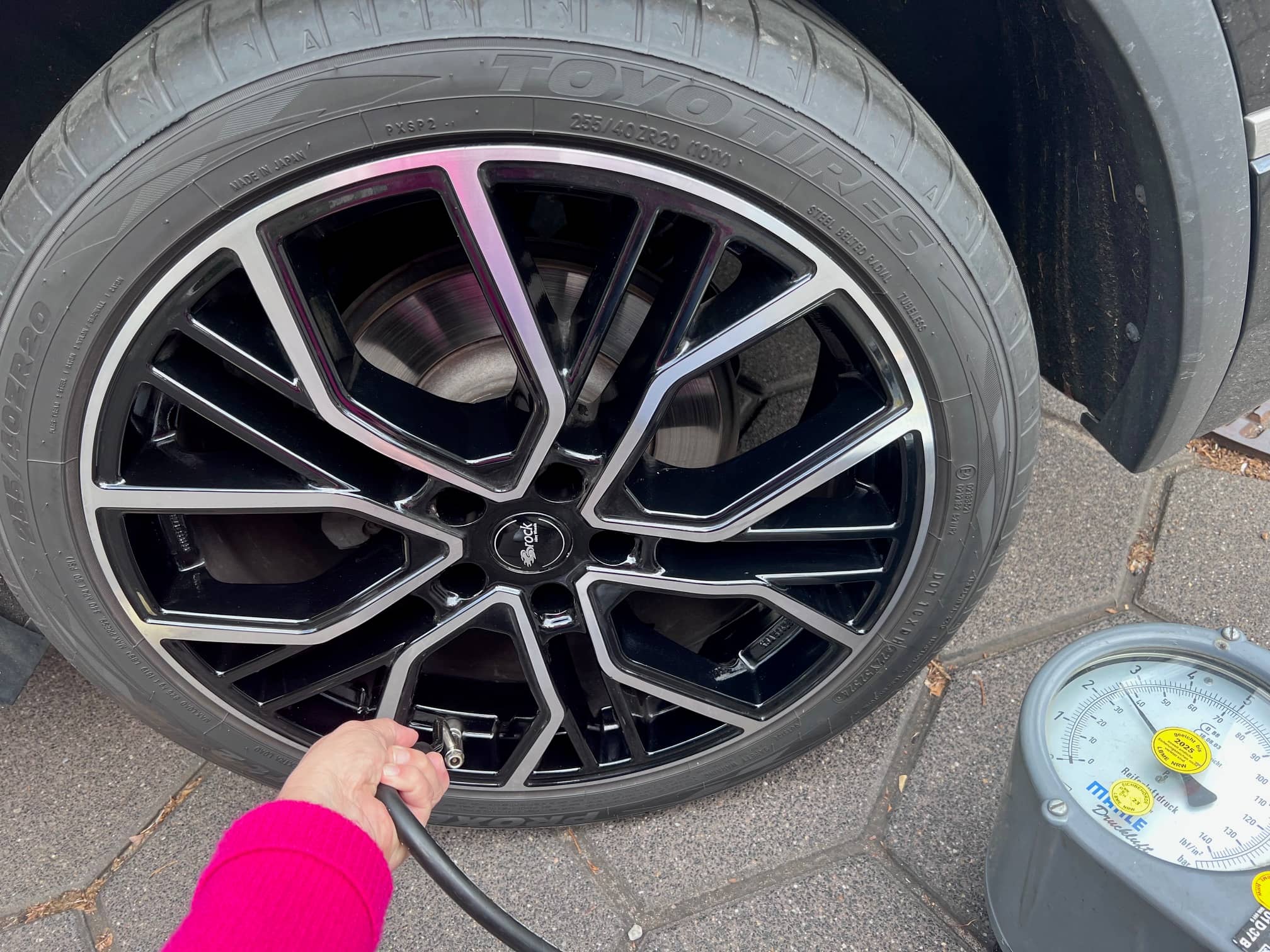
How to Measure Tire Pressure Correctly
- Check the tire pressure when the tires are cold, e.g., before starting your trip or after only a few kilometers
- Gas stations are suitable for refilling air
- The correct pressure values can be found on the B-pillar on the driver’s side, inside the fuel filler flap, or in the vehicle owner’s manual
Tip: Regularly checking your tire pressure not only improves safety but also saves fuel and reduces tire wear.